Categories
Categories

Advantages Of Metal Laser Cutter-Laser cutting equipment

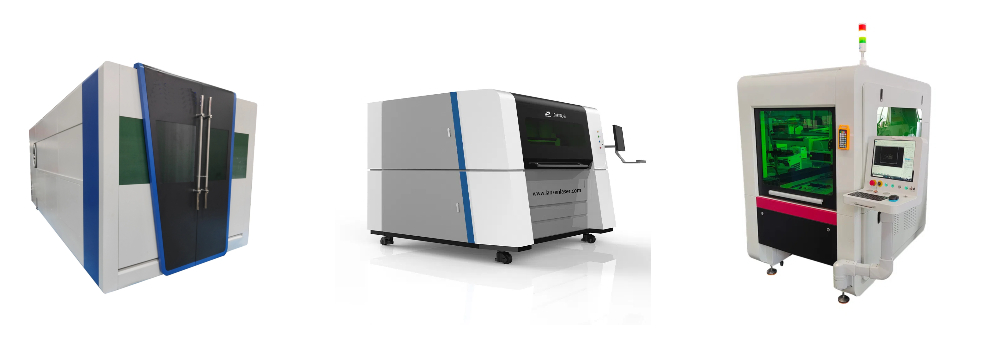
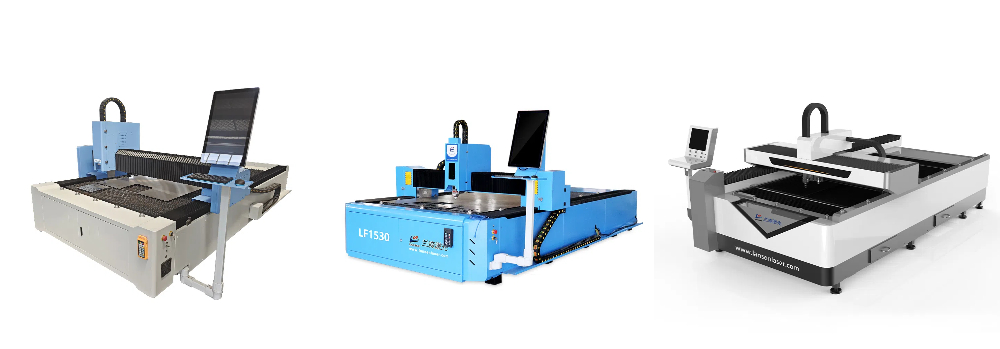
Common metal cutting machines include fiber laser cutting machines, plasma cutting machines, and carbon dioxide hybrid cutting machines.
Nov 24th,2026 10 Views
 

The specific advantages of metal laser cutters are as follows:

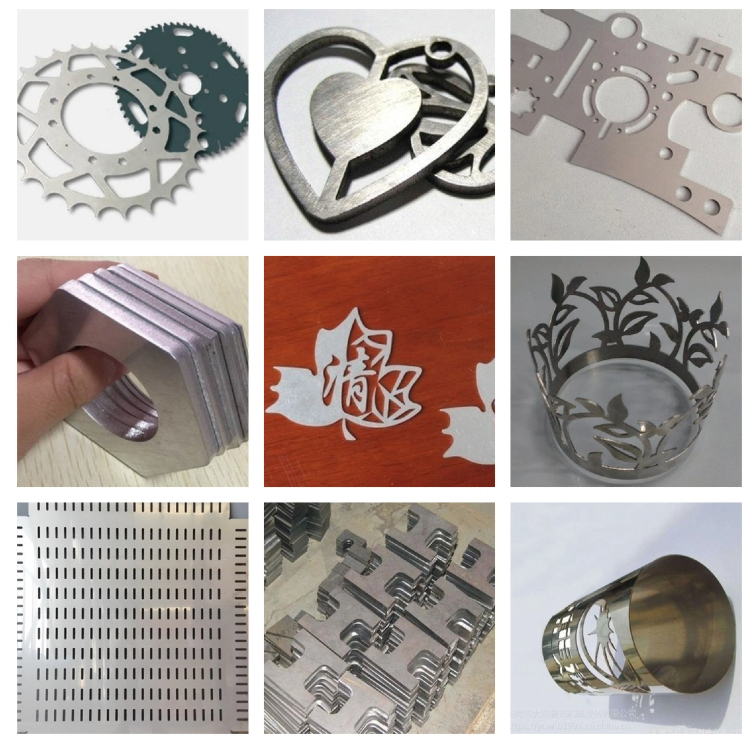
  1. Not affected by the shape of the work piece: laser processing is flexible, can process any graphics, can cut pipes and other shaped.
  2. The cutting surface is smooth: the cutting surface has no burrs, and the surface roughness of the cutting surface is generally controlled within Ra12.5.
  3. Good cutting quality: no contact cutting, the edge is less affected by heat, there is basically no thermal deformation of the work piece, completely avoiding the collapse formed when the material is punched and sheared, and the slit generally does not require secondary processing.
  4. Improve the speed of new product development: After the product drawings are formed, laser processing can be performed immediately, and the new product can be obtained in the shortest time.
  5. High precision: positioning accuracy 0.02mm, repeat positioning accuracy 0.03 mm
  6. Narrow slit: The laser beam is focused into a small spot, so that the focal point reaches a very high power density, and the material is quickly heated to a vaporization level to evaporate to form a hole. As the beam moves relatively linearly with the material, the holes are continuously formed into slits of narrow width. The slit width is generally 0.10 to 0.20 mm. The cutting material has a thickness of 10 mm.
  7. Do not damage the work piece: the laser cutting head will not contact the surface of the material to ensure that the work piece is not scratched.
  8. Material saving: Computer programming can be used to cut the entire board material into different shapes to maximize the utilization of materials.
  9. Not affected by the hardness of the material to be cut: the laser can process steel plates, stainless steel, aluminum alloy plates, hard alloys, etc., regardless of the hardness, can be cut without deformation.


    Comparison of Plasma and Fiber Laser Cutting Machines

    A.Working principle

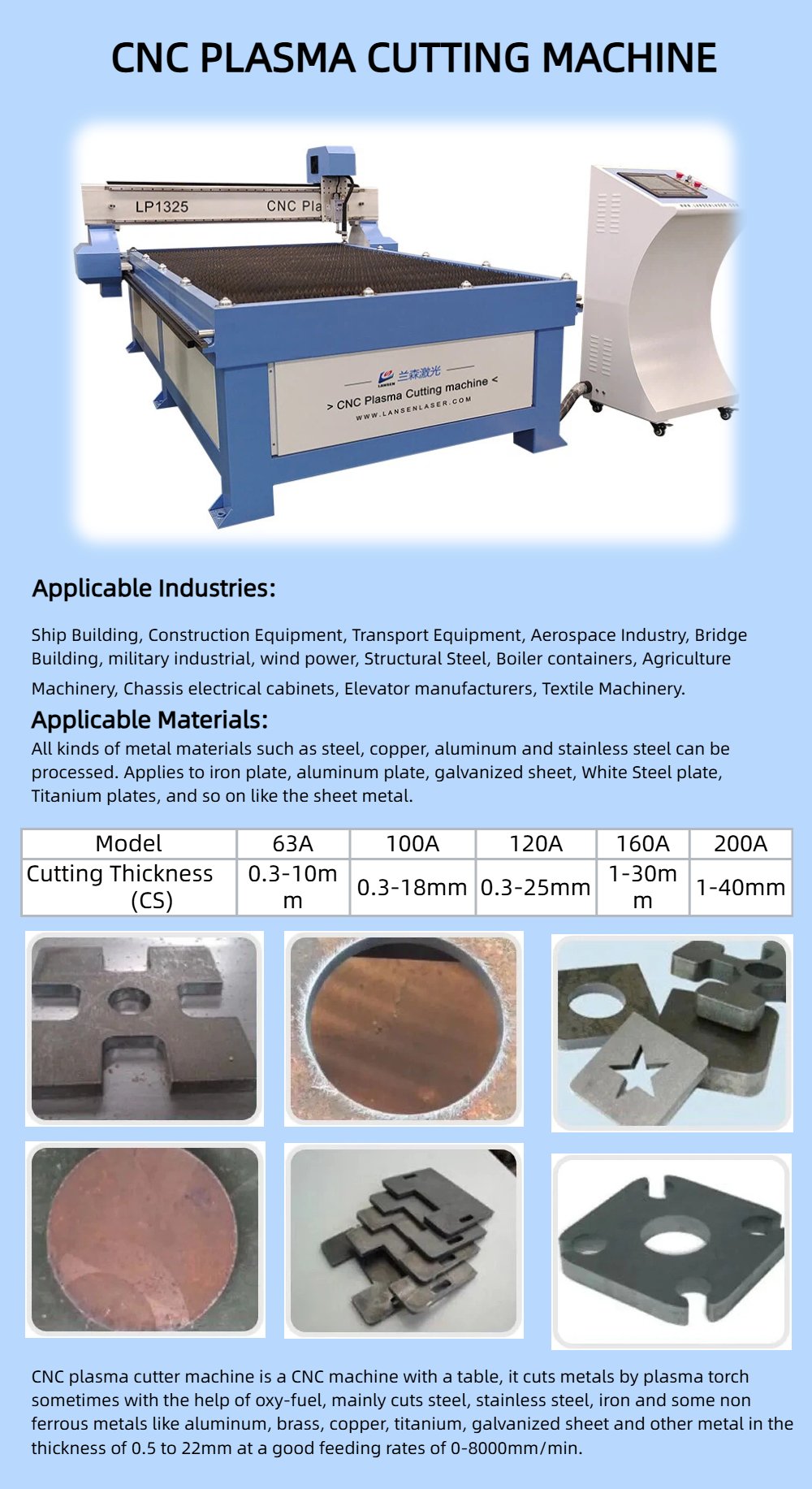
    Plasma cutting machine: Heats gas to extremely high temperatures to form plasma, melts material using high-speed jetted plasma gas, and removes molten metal by its momentum to create a cut.  

    Fiber laser cutting machine: A type of laser cutting that uses a laser beam emitted from a fiber laser generator, focused into a high-power-density beam via an optical system to irradiate the workpiece. The material absorbs heat, causing temperature rise and vaporization to form holes, while coaxial high-pressure gas removes molten metal to complete the cutting process.

    B.Difference in cutting accuracy and quality

    In terms of cutting accuracy, fiber laser cutting machines perform exceptionally well, with an accuracy of 0.1 to 0.2 millimeters. The cuts are smooth and flat, with almost no burrs, and the heat affected zone is small. Usually, they can be directly used without secondary processing. In contrast, the accuracy of CNC plasma cutting machines is generally within 1 millimeter. The fine plasma technology can be improved to around 0.5 millimeters, but overall, it still falls within the medium accuracy level. The cuts made by plasma cutting are relatively rough, often accompanied by slag hanging and tapering phenomena, and the heat affected zone is larger. Subsequently, grinding or secondary processing is often required. In terms of cutting width, the cutting width of laser cutting is narrow, usually ranging from 0.1 to 0.3 millimeters, while the cutting width of plasma cutting is wider, approximately 1 to 3 millimeters. In terms of plate deformation control, laser cutting has smaller plate deformation due to concentrated heat input and a small heat affected zone; while plasma cutting has relatively larger heat deformation due to relatively dispersed heat input. Overall, laser cutting belongs to the category of fine processing, while plasma cutting is more inclined towards rough processing or thick plate cutting

    C.
     Applicable Materials and Thickness Range
     
    The fiber laser cutting machine is suitable for a wide range of materials, including carbon steel, stainless steel, aluminum alloy, copper, titanium alloy, and many other metals. However, for cutting high-reflection materials such as copper and aluminum, higher power or special processes are required. The optimal thickness range is mainly in the medium-thin plate category. For carbon steel, it can generally be cut to less than 20 millimeters, and with high-power equipment, it can reach more than 30 millimeters; for stainless steel, it can generally be cut to less than 15 millimeters, and with high-power equipment, it can reach more than 25 millimeters; for materials with high reflectivity such as aluminum and copper, due to the influence of reflectivity, higher power or special gas protection is needed. The numerical control plasma cutting machine is mainly suitable for conductive metals such as carbon steel, stainless steel, and aluminum, and cannot cut non-conductive materials. It has obvious advantages in thick plate cutting. For carbon steel, it can be cut to 1 to 100 millimeters or even thicker; for stainless steel and aluminum, it can be cut to 1 to 50 millimeters or more; for ultra-thick plates over 30 millimeters, plasma cutting is more cost-effective. In summary, lasers are faster and have higher precision in cutting plates less than 20 millimeters thick, while plasma has a greater cost advantage in cutting thick plates over 20 millimeters.

    D.Comparison of Cutting Speed and Efficiency
     
    In terms of cutting speed for thin plates, fiber laser cutting machines perform exceptionally well, with speeds up to 3 to 5 times that of plasma cutting. For example, the cutting speed for 1 millimeter carbon steel can reach several meters per minute. However, in thick plate cutting, the laser cutting speed decreases significantly as the thickness increases, while the plasma cutting speed remains relatively stable. Therefore, in thick plate scenarios, the overall efficiency is higher. In terms of material change and programming, both devices support CNC programming. The laser cutting machine does not require molds and has high flexibility, allowing for quick switching of different graphics. The plasma cutting machine also supports CNC programming, but it requires stopping the operation when changing electrodes, nozzles, or adjusting gases, resulting in slightly less flexibility.

    E.Typical Application Scenarios
     
    Fiber laser cutting machines are widely used in the automotive manufacturing industry, such as body panels and chassis components; they are also applicable to industries like elevators, kitchenware, advertising signs, and precision hardware; and they have important applications in fields with high precision requirements such as new energy, aerospace, etc. Numerical control plasma cutting machines are mainly used in industries like steel structures, pressure vessels, and construction machinery; they perform particularly well in scenarios such as shipbuilding, bridge construction, and large component cutting; and they are especially suitable for scenarios with high thickness requirements and medium precision requirements.
    Saving mold investment: laser processing does not require mold, no mold consumption, no need to repair the mold, saving time to replace the mold, thereby saving processing costs and reducing production costs, especially suitable for processing large products. After understanding the advantages of metal laser cutters and common tools for sheet metal cutting.

    F.Selection Suggestions
     
    If the enterprise needs to cut thin plates (less than 20mm), and requires high precision and high surface quality, an optical fiber laser cutting machine is a better choice; if the main task is to cut thick plates (more than 20mm), with a low requirement for precision and a focus on cost reduction, a numerical control plasma cutting machine is more suitable. If the enterprise needs to cut various materials (such as stainless steel, aluminum, copper, etc.) and has complex graphics, the optical fiber laser cutting machine has more advantages; if the budget is limited and the main tasks are structural components and thick plate cutting, the numerical control plasma cutting machine offers better cost performance. For enterprises that require high flexibility, small batch and multi-variety production, the optical fiber laser cutting machine can better meet their needs.

    In conclusion, both types of equipment have their own advantages and disadvantages. When making a choice, one should comprehensively consider factors such as actual processing requirements, material type, thickness range, precision requirements, and budget size. If necessary, two types of equipment can also be configured according to the characteristics of the production task to achieve complementary advantages.
CONTACT US

If you have interest on our product, don't hesitate to get in touch with us! We will contact you as soon as possible!
Name
Email
Phone Number *
Message
Message Us